









With the beginning of Black History Month, it’s important to honor the achievements, contributions, and resilience of African Americans throughout history. February is a time to recognize individuals who shaped the nation in areas such as civil rights, science, literature, politics, sports, and the arts.
To begin with Black History Month, Langston Hughes, whose birthday coincidentally lands on February 1st (Happy Birthday! 🎂), was one of the most influential writers of the Harlem Renaissance and a powerful voice for Black identity, pride, and resilience. Through his poetry, essays, and short stories, Hughes captured the everyday experiences of Black Americans and gave them a place in American literature.
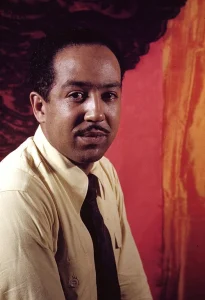
Portrait by Carl Van Vechten, 1942 (source: wikipedia)
His poems often focused on themes of dreams, hope, and perseverance in the face of injustice. Hughes believed that Black art should reflect real life, and his work helped shape how future generations understood culture, equality, and self-expression. A few memorable poetry works include:
- The Weary Blues
– The Weary blues was Hughes’ first major collection of poems that talked about the everyday black life in Harlem with topics that revolve around the struggles, exhaustion, and resilience of people. The poem describes the emotional weight of racism and poverty.
-It’s an important piece of poetry because Hughe blends jazz and blues rhythms into poetry, making it feel musical and alive. The poem focuses on ordinary people, not idealized or “polished” characters. It shows how music becomes a way to express pain and survive hardship
- Montage of a Dream Deferred
-Montage of a Dream Deferred was a long poetry sequence that talked about life in Harlem after World War 2, dreams that are delayed or denied because of racism and inequalities, and the frustration, anger, hope, and tension in Black communities during this time.
-It’s an vital piece of poetry since it reflected the growing sense of urgency and unrest in the mid-20th century and showed how unfulfilled dreams can build pressure over time
- Not Without Laughter
-Not Without Laughter was Hughes’ first novel that talked about a young black boy growing up in Kansas with themes surrounding Family, Poverty, Religion and Racial Identity along with the inclusion of challenges in coming of age in a segregated society.
-It’s a crucial piece of poetry because it shows multiple perspectives within the Black community and it balances hardship with warmth, humor, and hope.
But, Langston Hughes wasn’t only involved in poetry and literature. Hughes was also involved in activism. Through poetry, essays, and novels, Hughes openly addressed segregation, economic hardship, and the repeated denial of the American Dream, especially in works like Montage of a Dream Deferred. He also celebrated Black culture, music, and language as sources of pride and resistance at a time when they were often dismissed. By writing in a clear, accessible style meant for everyday readers, Hughes made literature a tool for social change, proving that art could be both meaningful and a powerful form of activism.
Overall, Langston Hughes’s work demonstrates how literature can serve as a powerful form of activism. He honestly portrays the struggles, dreams, and resilience of Black Americans. Through his literature, Hughes challenged racism and demanded recognition for voices that were often ignored. His celebration of Black culture and commitment to accessible writing allowed his message to reach a wide audience, making social injustice impossible to overlook. Through his poetry, novels, and essays, Hughes not only documented his time but also inspired future generations to use art as a means of resistance and change.
So, Let us celebrate Langston Hughes’ contributions in Black History Month!